
Lygia’s Passage from Hostage to Bride
Quo VadisLygia’s thread traces her movement from adopted security through captivity and flight toward a freely chosen Christian marriage.
increasing Bearing strength in each event
 decreasing
Bearing strength in each eventdecreasingA Daughter in the Household

A Daughter in the Household
Adopted belonging
Raised by Aulus Plautius and Pomponia Graecina, Lygia belongs to their household in affection, though she is legally a foreign hostage.
Faith and identity
Her Christian upbringing gives her a moral allegiance stronger than the privileges Roman society can offer.
Removal to the Palace
Removal to the Palace
Hostage status invoked
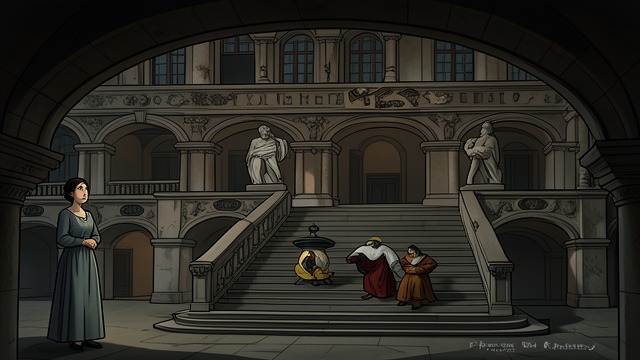
Nero’s order uses Lygia’s political status to remove her from the family that raised her. She has little legal power to resist.
A dangerous destination
Pomponia fears the palace’s corruption, while Lygia resolves to remember her faith there.
A Narrow Escape
A Narrow Escape
Refusal of coercion
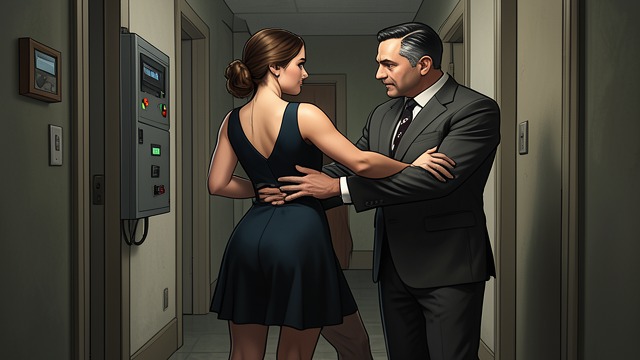
Lygia rejects Vinicius’s drunken attempt to possess her. Her resistance is supported by Acte and the physical intervention of Ursus.
Flight under constraint
She refuses both the palace and Vinicius’s house, fearing that either choice would expose her or the Plautius family to danger.
Shelter among Christians
Shelter among Christians
Hidden community
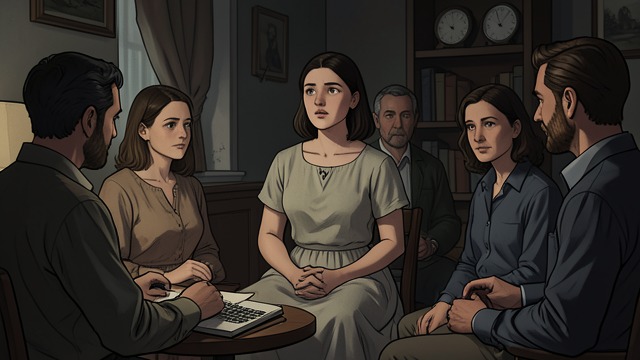
Lygia finds refuge with Christians in the crowded Trans-Tiber district. Their modest shared life contrasts with the imperial palace.
Love becomes a danger
She realizes she loves Vinicius, yet fears that this attachment may draw her away from her faith and chosen life.
Marriage and Rescue
Marriage and Rescue
The arena reversal
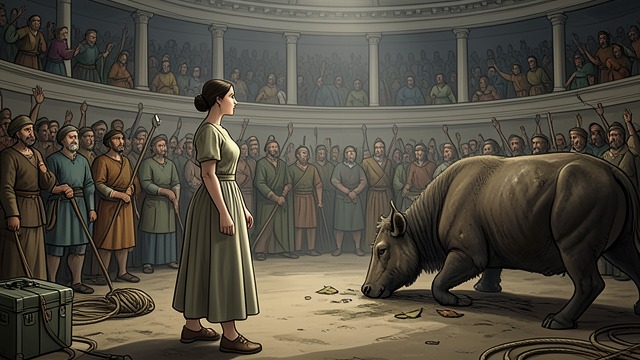
Ursus defeats the aurochs carrying Lygia, and the audience’s pity overcomes Nero’s reluctance to spare them.
A chosen union
Recovered in Vinicius’s home, Lygia accepts a future with him, now protected by shared belief rather than imperial coercion.
Years before the main action
After Vinicius’s visit to the Plautius household
The morning after Nero’s banquet
During her flight through Rome
After the arena spectacle
